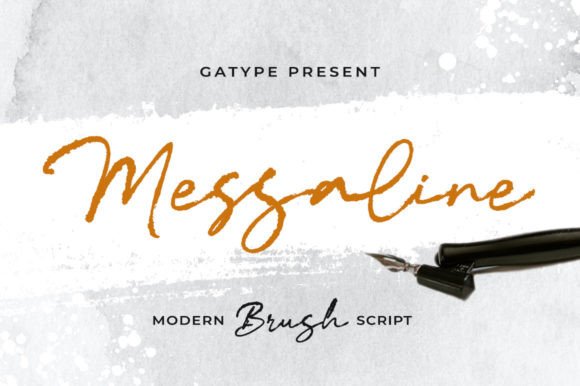
Messaline: A Brush Script Font with a Touch of Elegance
Messaline is a brush script font that brings a sense of relaxed luxury to any design. Its flowing, hand-drawn style evokes a feeling of warmth and sophistication, making it ideal for a wide range of creative applications. Whether you're designing a book title, a greeting card, or a brand logo, Messaline offers a unique visual identity that stands out in a crowded digital landscape.
What Makes Messaline Unique?
Messaline is not just another brush script font—it's a carefully crafted typeface that balances artistic flair with readability. The letterforms are designed to feel natural and organic, as if they were written by hand with a soft brush. This gives the font a distinctive character that sets it apart from more rigid or mechanical alternatives.
One of the key features of Messaline is its versatility. While it has a loose, freeform appearance, it still maintains a level of consistency that makes it suitable for both casual and formal use. This balance allows designers to use it in a variety of contexts without sacrificing clarity or aesthetic appeal.
Another standout aspect of Messaline is its ability to convey emotion. The gentle curves and soft strokes create a sense of approachability and charm, which can be particularly effective in branding and marketing materials. It’s a font that feels personal and inviting, rather than distant or impersonal.
Comparing Messaline to Other Brush Script Fonts
When considering brush script fonts, it's important to understand how Messaline compares to other popular options. While many brush scripts aim for a similar look, each has its own strengths and limitations. For example, fonts like Brush Script MT or Playfair Display offer a more structured and refined appearance, often at the expense of the organic, hand-drawn feel that Messaline provides.
On the other hand, some modern brush scripts, such as Berkshire Swash or Courier Prime, may prioritize technical precision over artistic expression. These fonts can be useful in certain design scenarios where consistency and legibility are paramount, but they may lack the personality that Messaline brings to the table.
Messaline sits somewhere between these extremes. It doesn't sacrifice readability for style, nor does it become too rigid in its execution. This makes it a great choice for designers who want to add a touch of elegance without compromising on functionality.
Strengths and Tradeoffs
Like any font, Messaline has its own set of strengths and tradeoffs. One of its greatest advantages is its visual appeal. The soft, flowing lines make it ideal for projects that require a sense of creativity and individuality. It works particularly well with designs that have a vintage or artisanal feel, such as invitations, packaging, and stationery.
However, there are situations where Messaline might not be the best fit. For instance, in highly technical or professional settings, a more structured and readable font could be more appropriate. Additionally, because of its brush-like texture, Messaline may not always render clearly at smaller sizes, especially when used in digital formats that require high levels of detail.
Another consideration is the font's character set. While Messaline includes a comprehensive range of letters and symbols, it may not support all languages or special characters. Designers working on international projects should verify compatibility before using the font in their work.
Best-Fit Situations for Messaline
Messaline is particularly well-suited for a variety of creative applications. Here are a few examples of when this font might be the right choice:
- Book Titles: The elegant, flowing nature of Messaline makes it an excellent choice for book covers or titles. It adds a touch of sophistication while maintaining readability.
- Stationery Designs: From thank-you notes to wedding invitations, Messaline can bring a sense of refinement and personal style to everyday stationery.
- Branding and Logos: For businesses that want to convey a sense of creativity and uniqueness, Messaline can serve as a powerful branding tool.
- Posters and Packaging: Its eye-catching style makes it a great option for promotional materials and product packaging.
- Greeting Cards: Whether it's a birthday card or a sympathy note, Messaline can help create a warm and personal message.
In these scenarios, the font's relaxed yet luxurious feel helps to enhance the overall design without overwhelming the viewer.
When to Consider Alternatives
While Messaline is a strong option in many cases, there are situations where other fonts might be more appropriate. For example, if you're designing a website or a digital document that requires high readability, a sans-serif or serif font like Arial or Times New Roman might be a better fit.
Additionally, if your project requires a more formal or traditional look, a font like Georgia or Baskerville could provide a more polished appearance. These fonts are often preferred in professional or academic contexts where clarity and structure are essential.
For those looking for a more modern or minimalist aesthetic, fonts like Helvetica Neue or Roboto offer clean, straightforward designs that are easy to read and widely supported across platforms.
Practical Examples and Comparisons
To better understand how Messaline performs in real-world applications, consider the following comparisons:
Example 1: Book Title Design
If you're designing a book cover, Messaline can add a unique and memorable element to the title. For instance, a fantasy novel titled "The Whispering Woods" would benefit from the fluid, expressive style of Messaline, helping to evoke a sense of mystery and enchantment.
Example 2: Logo Design
For a boutique clothing brand, Messaline could be used in the logo to reflect a sense of artistry and individuality. A simple tagline like "Wear Your Story" would feel personal and meaningful, aligning with the brand's values.
Example 3: Invitation Design
Wedding invitations often require a balance between elegance and approachability. Using Messaline for the main text can create a warm and inviting atmosphere, while a more traditional font like Playfair Display could be used for the subheadings or dates.
Conclusion
Messaline is a versatile and stylish brush script font that offers a unique blend of creativity and readability. While it may not be the best fit for every design scenario, it excels in situations where a relaxed, luxurious feel is desired. By understanding its strengths and limitations, designers can make informed decisions about when to use Messaline and when to explore alternative options.